Thursday, July 28, 2022

My Comfort Foods for a Chronic Autoimmune Disease

Food always brings me comfort. It's one of the reasons I started this blog: I love sharing recipes and foods that make me feel better in both body and soul. 

Some are family favorites found in my grandmother's recipe box. Others are meals at a cherished restaurant or served at a friend's backyard cookout. A few are treats in my pantry or freezer, just waiting to soothe my spirit when necessary. 


Of course, comfort foods change depending on life's adventures. Chocolate was my go-to for heartbreak, especially Häagen-Dazs chocolate-chocolate chip ice cream and Hostess cupcakes. (These are brownies made from actress Katherine Hepburn's recipe.) 


When my husband Mike, The Picky Eater, died eight years ago, I wrote about the comfort found in a pot of homemade minestrone


My consistent comfort go-to is mac and cheese, whether homemade, frozen or from a box—with peas on the side.


In May, I started treatment for the return of Birdshot Chorioretinopathy (also known as Birdshot Uveitis), a very rare autoimmune disease of the eyes. (Read all about it here.) I've had to deal with some not-too-pleasant side effects from the steroid prednisone and methotrexate, an immune suppressant medication. I'm experiencing extreme fatigue, loss of appetite, puffiness, moodiness, and some stomach queasiness. My digestive tract is—well, how do I pleasantly say this—not happy with me much of the time. I'm also trying to eat fruits, veggies, whole grains, and protein, as well as staying hydrated, for my overall health while dealing with these meds. And I'm watching my sugar and sodium intake because these meds can increase blood sugar levels and blood pressure.

Here are the foods and beverages bringing me comfort while I fight to save my eyesight (which has dramatically improved since I started the meds! Whoo hoo!):


Yogurt: This is my number one go-to food right now. It soothes my stomach while providing me with protein, calcium, and probiotics. I usually eat it for breakfast by mixing one container of Chobani Zero Sugar with a couple spoonfuls of plain yogurt, which makes it more filling and satisfying. I top it with a bit of cereal for crunch and blueberries. (I love blueberries.)  


Iced Tea: Hot and iced black tea has always soothed my stomach when it feels queasy. I make decaf iced tea so I can drink it anytime and not worry about messing up my sleep. I also add a bag or two of ginger tea into the mix for its stomach-soothing qualities.


Bare Organics Cardo Care Coffee: I started drinking this coffee right before I started on my meds. I love mocha and cinnamon coffees, so the ad for Cardo Care on social media caught my eye. It turns out this coffee is soothing to my stomach (do you see a theme happening here?), perhaps from the ginger. And the anti-inflammatory properties of turmeric help combat the inflammation in my eyes caused by my over-zealous immune system. 


Aura Bora Sparkling Water: I try to stay well hydrated, and water with bubbles makes the effort more enjoyable. I love Aura Bora's unique blend of herbal and fruity flavors. My favorite depends on the day, but the Ginger Meyer Lemon, Lavender Cucumber, Peppermint Watermelon, and Basil Berry are tops on my list. Oh, and Cactus Rose is good, too! 


Peanut Butter: Probably my favorite go-to food besides yogurt. I eat a piece of whole grain bread slathered with peanut butter almost daily!


Cheese: Another great way to tame my hunger, nourish my body, and comfort my spirit. Especially on hot summer days, a light supper of cheese, crackers, and veggies is perfect!


Homemade Trail Mix: I like making my own mixture of nuts to get the ones I like—almonds, hazelnuts, walnuts, macadamia, and peanuts—without the ones I don't—cashews (yep, I don't like them) and pecans (which I like for baking but not for snacking.) I add whatever dried fruit I have on hand, usually cranberries or blueberries.  


Fruit: Refreshing nourishment! I usually eat a banana and apple every day at a minimum.


Chicken Noodle Soup: When I began the meds, it was still cool enough for soup. I like to give homemade chicken noodle soup to friends and family when they are sick or recovering from an illness. This time, I made it to help me feel better.


Whole-Wheat Banana Muffins: I love a good muffin for breakfast or a snack. This recipe is my favorite. I usually add 1/2 cup of oatmeal to the mix to give it more of a nutritional boost. 


Homemade Chocolate Chip Blondies: Based on this recipe for candy-filled blondies, I changed it up to use In the Raw Zero Calorie natural sweetener blend, Truvia Brown Sugar Blend, and Lily's No Sugar Added chocolate chips. It is the perfect "sweet" treat! 


What are the comfort foods you enjoy to soothe your soul? Leave your favorites in the comments below. 


***Hey, thanks for reading! If you've enjoyed my posts or tried one of my recipes, you can support my writing efforts through Buy Me a Coffee...or tea...or flavored fizzy water. Your donation will be greatly appreciated, especially now as I deal with a chronic autoimmune disease that flared back up again. The button is located on the right-hand side of this page or you can follow the link here. If you can't donate, that's okay, too. Either way, thank you so much for reading my stuff!  

Thursday, July 14, 2022

Native American Corn Frittata Inspired by Blackbear Bosin

This simple brunch, lunch, or supper frittata is inspired by a recipe submitted to the Mid-America All-Indian Center Cookbook by renowned artist Blackbear Bosin. It’s an easy skillet meal filled with veggies and smoky bacon, then topped with cheese. I serve it with a salad on the side, but the frittata can be a complete meal all on its own.


Lately, I’ve had two criteria for my dinner meal planning. One is the menu must be simple. It’s summer, after all. The other is the food must be soothing since the medication I’m on for my autoimmune disease can do a real number on my stomach and appetite. I typically have the ingredients for this frittata on hand, so it makes a fast and easy dish for a busy weeknight supper or weekend brunch.


Last year, I visited the Mid-America All-Indian Museum in Wichita, Kansas. I bought a copy of the museum’s cookbook before I left and was thrilled to find a recipe submitted by artist Blackbear Bosin. He designed the iconic Keeper of the Plains statue on the Arkansas River outside the museum. 

He also painted some beautiful pieces, such as one titled Prairie Fire, which was in National Geographic magazine. Bosin also drew several humorous cartoons featuring Native Americans.


On my first try, I made his recipe just as written, but it didn’t turn out to my liking. I wasn’t happy with the flavor of the frozen O’Brien potatoes, and there was too much bacon and corn and not enough egg. And no cheese.


This notation came at the end of the recipe. I’m assuming it was from Bosin: “This recipe is based on memories of long time past. This is a basic frittata. The ingredients are unique to the Native American cooking style [except the cheese]. Quantities and cooking times will vary based on the number of servings desired.”


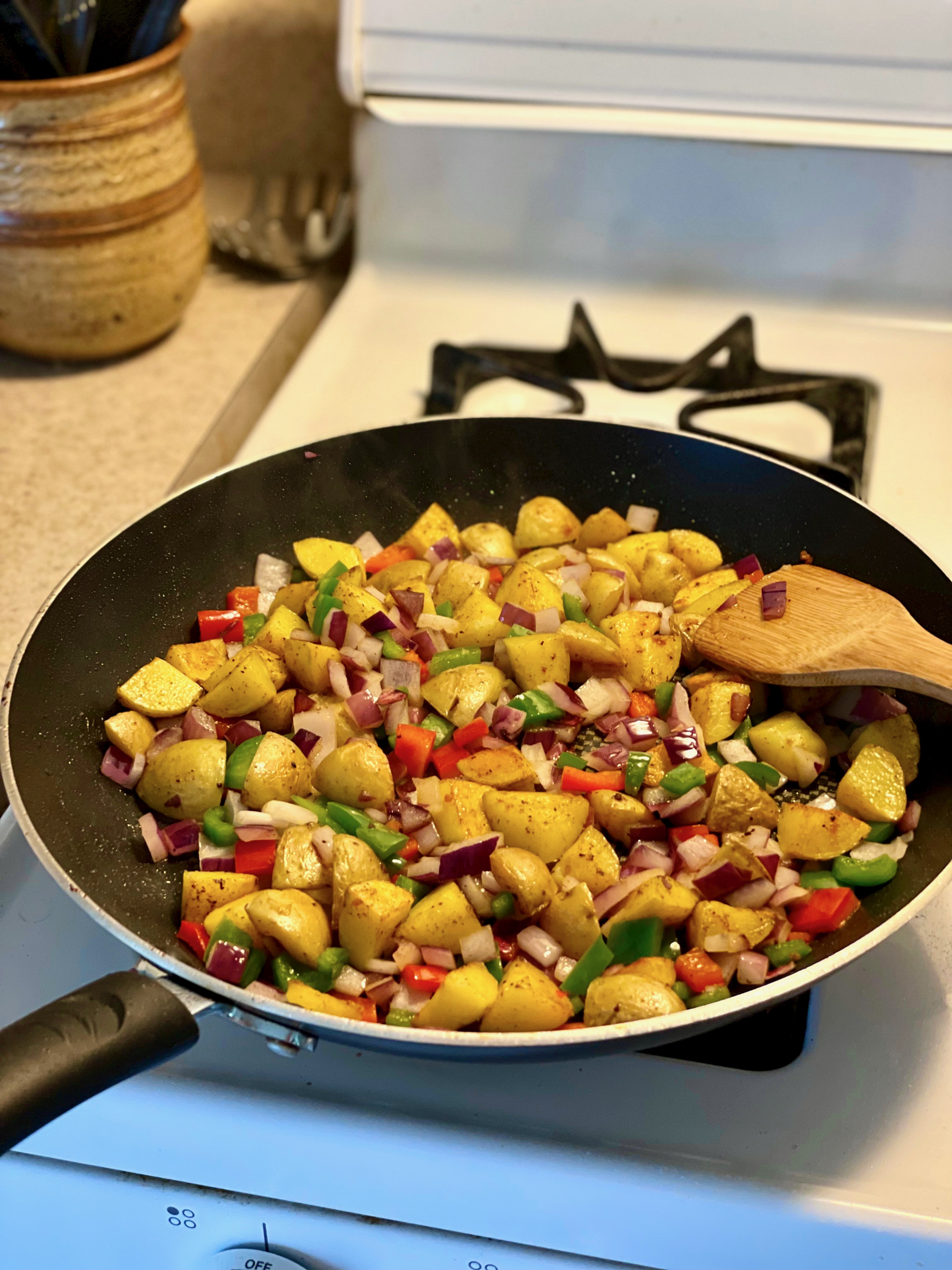
Keeping in mind that the dish was meant to be like a frittata, I increased the number of eggs, cut back on the bacon, and added cheddar cheese. I also swapped out the frozen potatoes for diced pre-cooked potatoes, onion, and green pepper. 


The results were perfect—a one-skillet meal full of veggies and protein. I can see myself turning to this dish often when I want a simple dinner packed with nutrition. 


***Hey, thanks for reading! If you've enjoyed my posts or tried one of my recipes, you can support my writing efforts through Buy Me a Coffee...or tea...or flavored fizzy water. Your donation will be greatly appreciated, especially now as I deal with a chronic autoimmune disease that flared back up again. The button is located on the right-hand side of this page. If you can't, that's okay, too. Either way, thank you so much for reading my stuff! 
 

Thursday, July 7, 2022

Living Life with a Chronic Autoimmune Disease

Autoimmune diseases are a discouraging pain in the butt! Especially when you have a rare one nobody has ever heard of before. And when the treatment makes you feel worse than the actual disease. I've been dealing with one for the past few months, so I thought I'd post about it here so you'd know what's been going on in my world.


In 2000, I was diagnosed with Birdshot Chorioretinopathy (also known as Birdshot Uveitis), a very rare autoimmune disease of the eyes. According to the National Institutes of Health, it is estimated that less than 300 to 3000 people may have this disease in the U.S. My immune system attacks and inflames the cells in the back of my eyes. No one knows what causes this. I have the HLA-A29 genetic marker, which I guess makes me a great candidate for this disease. If not treated, I would eventually lose my sight.

Not the kind of news a writer wants to hear. 

At the time, I lived near Boston and was able to see a doctor who was a leading expert in the disease. I didn't lose any vision and was declared in remission in 2009—after nine years on immunosuppressant medications.

A couple of months ago, I noticed my vision getting worse. The floaters were back in force like someone sprinkled black pepper in my eyes. I had areas of sparkling lights and just wasn't seeing as well in general. My ophthalmologist in Topeka sent me to a retinal specialist who confirmed the Birdshot had returned. Sigh.
 
Photo credit: Birdshot Uveitis Society

This photo gives you an idea of what Birdshot does to my vision, but I'm not as bad as that. On 5/10, I started on 60 mg of prednisone daily for two weeks. I then went down to 40 mg for a month, then 30 mg for three weeks. Yesterday I dropped to 20 mg daily. The prednisone has helped decrease the inflammation in my eyes (yay!), and I'm seeing a bit better.

On June 3rd, I started on methotrexate. This immune suppressant medication was once used to treat some forms of cancer. To treat autoimmune diseases, you take it once a week. Even so, it packs a punch on your immune system and the body overall. The prednisone decreases inflammation immediately, and the methotrexate's job is to get my immune system to knock it off and stop attacking my eyes.

While my vision has improved, these meds are doing a number on my body overall. I'm constantly fatigued, often queasy, not much appetite, and puffy from the prednisone. Yogurt and tea are my friends! I cut out sweet treats and watch my sodium intake because prednisone can increase blood sugar levels and high blood pressure. I'm eating lots of fruit, veg, whole grains, proteins, and healthy fats, so my body is fueled well to balance the harsh meds. I also take a boatload of supplements—calcium, D3, B12, magnesium, turmeric, probiotics, and a prescription folic acid. 


I'm discouraged to be going through this again. Being a writer, you can imagine my stress about losing my sight. Not to mention the physical and financial hardships a chronic illness can impart. And finding doctors who know this rare disease and how to treat it. 

I keep reading these verses from Paul's letter to the Philippians: "Do not worry about anything, but in everything by prayer and supplication with thanksgiving let your requests be made known to God. And the peace of God, which surpasses all understanding, will guard your hearts and your minds in Christ Jesus." (Philippians 4:6-7)


Any prayers and good wishes you would like to put out into the universe will be greatly appreciated. 

If you want to learn more about Birdshot Uveitis, check out this link. 

***Hey, thanks for reading! If you've enjoyed my posts or tried one of my recipes, you can support my writing efforts through Buy Me a Coffee...or tea...or flavored fizzy water. Your donation will be greatly appreciated, especially now as I deal with a chronic autoimmune disease that flared back up again. The button is located on the right-hand side of this page or you can follow the link here. If you can't donate, that's okay, too. Either way, thank you so much for reading my stuff!  

Friday, July 1, 2022

Raspberry Lime Rickey is the Summer Drink for 2022

Raspberries, limes, and bubbles…what’s not to love! The Raspberry Lime Rickey is the perfect summer refresher. I like mine made with plain seltzer or club soda, but a sweeter version is possible by using lemon-lime soda (or pop, as we call it in the Midwest.) Add gin or vodka to make it an invigorating warm-weather cocktail. 

A refreshing Raspberry Lime Rickey

The Raspberry Lime Rickey is a favorite beverage among New Englanders. I first stumbled across this drink on a Concord, Massachusetts, ice cream shop menu in the early 1990s. The name caught my attention: What was a Raspberry Lime Rickey? The server explained it was a raspberry-lime syrup mixed with seltzer water. Of course, I had to try it and immediately fell in love with the tangy-sweet combo of flavors. 

Add as many lime slices and raspberries as you want!

For the following 20 years I lived in the region, I ordered a Rickey every time I saw it on a menu. Sometimes it was sweeter if the eatery used lemon-lime soda (typically Sprite) instead of seltzer. I prefer the less-sweet version, but I’m also a fan of un-sweet seltzer water overall. Sometimes I would order it at a bar with an added shot of gin. It was a fun diversion from my typical summer gin and tonic.


To make the raspberry-lime syrup, place raspberries, sugar, and water into a saucepan. Cook until the berries begin to get juicy and the sugar dissolves. Mash the raspberries with a fork or potato masher. Add lime juice and zest, and continue to simmer until the mixture begins to thicken.


Pour the raspberry-lime mixture into a fine-mesh strainer set over a bowl. Press down on the mixture with a spatula to help extract all of the liquid. Discard the leftover solids. Chill the raspberry-lime syrup in the refrigerator until completely cold.


Store the raspberry-lime syrup in the refrigerator for a week. I also keep mine in the freezer, but it doesn’t freeze solid for some reason. (Maybe someone with a more scientific mind than I’ve got can explain why.) I mix up individual glasses, but all the syrup and bubbly-beverage-of-choice can be combined in a large pitcher for a summer party. 


To learn more about the history of the Raspberry Lime Rickey, check out this article on the New England Today website. 


Friday, June 24, 2022

How to Care for Berries 101


Blueberries, strawberries, blackberries, raspberries…I love them all, especially when they are freshly picked and tasting like sunshine. However, few things are more discouraging than spending money on fresh berries only to have them go bad before you use them up. Thank goodness this method on how to care for berries I read in Cooks Illustrated magazine keeps them fresh as long as possible. It also works for other fruits and vegetables as well.

Wash the berries in a bowl with three parts water and one part white vinegar. Then drain and rinse. (For other fruits and vegetables, fill a spray bottle with the water-vinegar solution, give them a spritz, and then rinse.)

           
I typically let my berries air-dry, but you can also place the more sturdy ones like strawberries and blueberries into a salad spinner lined with three layers of paper towels. Then spin until dry. Delicate raspberries can be laid out onto a paper towel-lined counter or baking sheet and allowed to dry. (A fan blowing on the berries will speed up the process.)
           
Once cleaned, place the berries in a container lined with paper towels and keep them in the refrigerator. Leave the lid opened a bit to allow any excess moisture to escape.
           
The extra berries I purchase are headed straight for my freezer to enjoy the rest of the year. How to freeze your berries? After the berries are cleaned and dried, place them on a rimmed baking sheet lined with waxed paper. Then pop the sheet into the freezer. Once they are completely frozen, remove the berries from the baking sheet and place them into a zippered freezer bag.
           
Both fresh and frozen berries work well in so many recipes, from smoothies to pancakes. When using the frozen ones, most recipes will tell you if they need to be thawed out first. When in doubt, thaw the berries.


Thursday, June 9, 2022

Muffuletta Sandwich Recipe


I love a good sandwich in the summertime. Sure, salads are great too, but I find a sandwich to have much more staying power, especially if I’m busy doing yard work, sightseeing, or just playing in the sunshine. Plus, a sandwich is much easier to transport for a picnic at the park, beach, or backyard.

Photo from Central Grocery
Have you ever heard of a muffuletta sandwich? It is an iconic New Orleans favorite created at Central Grocery and Deli. A muffuletta is filled with Italian cold cuts and cheese. The difference-maker is the olive salad, which is somewhat like a tapenade but chunkier. It’s a combo of olives, garlic, herbs, olive oil, and vinegar and gives the sandwich a complex flavor beyond the typical Italian sub.  


For me, the key component of a good sandwich is the bread. The traditional muffuletta bread is round and topped with sesame seeds. I used a delicious slow-fermented olive oil ciabatta from my recent Wildgrain box order. It was perfect—soft on the inside, crusty on the outside, and just the right amount of sourdough tang. (FYI: I have a terrific deal to share with you from Wildgrain! See the below!) 

You will want to make the muffuletta olive salad a day or more ahead, so the flavors have a chance to mix and mingle. Otherwise, a muffuletta is a snap to put together. I think the sandwich is even better the next day, so feel free to make it the day before and store it in the fridge. 


Now, for the Wildgrain deal mentioned above. If you follow me on social media, you know I’ve enjoyed all the wonderful items I received in my first box. Wildgrain is the first membership box that delivers bake-from-frozen sourdough breads, fresh pastas, and artisan pastries to your home. Everything bakes within 25 minutes (no thawing!) and are made with clean ingredients.


My box contained three different sourdough loaves of bread (including the ciabatta I used for this Muffuletta recipe), sourdough rolls, croissants, and two kinds of pasta. 


Here’s the deal, and it’s a big one: Follow this link to order your first Wildgrain box and use the promo code SUNFLOWERLIFE, and you’ll get $30 off your first order! (And I’ll get a small commission as well.) Not only are the breads delicious, but I love having them delivered right to my door. Especially since the nearest artisanal bread bakery to my home is a 30-minute drive. Give them a try! 


Friday, April 29, 2022

Shredded Beef Enchilada Casserole Recipe


It can be a challenge to put together a Cinco de Mayo celebration dinner when the holiday falls on a weekday. This Shredded Beef Enchilada Casserole is a tasty solution. You can assemble it this weekend and have it ready to pop in the oven on May 5th. 

I first made this roast beef casserole for my niece and her family. They loved it so much she’s requested it two more times. I even gave her a pan as a Christmas gift! Of course, I made a smaller pan full of goodness as well for Mom and me to enjoy. 

The beef is what puts this recipe over the top. A meaty chuck roast slow cooks until it’s fall-apart delicious. I typically prepare the meat a day before assembling the casserole, and I make more than I’ll need for the recipe to have extra shredded beef for tacos, burrito bowls, and barbecue sandwiches.


As I said, you can make this entire shredded beef enchilada casserole recipe a day or two ahead of time. Just assemble, cover, and store in the refrigerator or freezer until needed. (If frozen, unthaw the casserole before baking.) 


Also, here’s a link to recipes I got while in Mexico for Mango Margarita, Guacamole, and Drunken Salsa to complete the meal.


Divertirse!


Monday, April 11, 2022

Foods at the Last Supper


As Christians worldwide enter Holy Week, our thoughts turn to those last days of Jesus’s life. Have you ever wondered what was served at the Last Supper? Recently I taught a Sunday School class on the topic. We all know bread and wine made an appearance, which Christ transformed into the Holy Eucharist. But there was more food served at the meal.

Scholars debate about whether or not the Last Supper was a Passover Seder. While verses found in the gospels of Matthew, Mark, and Luke talk about the meal taking place on the first day of Unleavened Bread, the Book of John seems to depict the meal and Jesus’s crucifixion occurring before the start of Passover. 

The book The Origins of the Seder: The Passover Rite and Early Rabbinic Judaism, written by Baruch Bokser, says scholars disagree on the answer. It notes, “The current state of scholarship tends to argue against the identification of the Last Supper as a Seder.”

An article in The Jerusalem Post published on 4/13/2014 notes, "The truth may be that though the last supper took place shortly before Passover, it was not a seder at all but a talk-feast, a meeting of the fellowship – the havurah – which Jesus constituted with his disciples. The participants would have said the regular blessings over bread and wine, as well as the grace after meals, like devout Jews at any meal: important elements, to be sure, but on their own they do not add up to a Seder."

So, just what did Jesus and the disciples eat at the meal? In 2015, archaeologists Generoso Urciuoli and Marta Berogno released a study that concluded the Last Supper would have consisted of:

  • Cholent, a stew of beans, potatoes, and beef, is started on Friday afternoon and allowed to cook overnight to be eaten at noon on the Sabbath. Jews still eat versions of this today. (Check out this recipe from the New York Times.)
  • Bitter herbs, which symbolize the bitterness and harshness of the slavery that the Hebrews endured in Egypt.
  • Charoset, also known as haroseth, a chunky fruit and nut paste. 
  • Unleavened bread and wine, of course.

One thing missing was lamb. In 2007, Pope Benedict XV stated lamb was not served at the Last Supper since the meal took place before the ritual sacrifice of the paschal lambs. Jesus took the place of the lambs. This announcement lends credence to the idea the dinner wasn’t a Passover seder. 

There were two things about the Last Supper menu I found intriguing. One was the charoset. I saw many recipes online made with apples, but since only crabapples were common in the first-century Mediterranean area, I adapted a recipe made with dried fruit. Most also used Mederia or dry sherry, but I went with lemon juice. The result is a mixture similar to a chunky jam. It was a hit in my household! The charoset also tastes great on buttered toast and in peanut butter sandwiches.


I was also curious about unleavened bread. I know it is common for Jews to celebrate Passover with matzah (also spelled matzo and matza), an unleavened flatbread you can find in most grocery stores. However, I wanted to try making it myself.


The unleavened bread doesn’t have much flavor, which makes sense when you consider it was used in Jesus’s time as a utensil to scoop food out of bowls. It would be the perfect accompaniment to cholent, and it tasted great slathered with charoset. 


As we approach the Easter celebration, I hope this information brings more meaning and insight to your Holy Week devotions.  

Unleavened Bread

Serves 8

2 cups unbleached all-purpose flour

1 cup whole wheat flour

1 1/2 teaspoons salt

1 tablespoon olive oil

1 tablespoon honey

1 cup water

Add all of the ingredients into the bowl of a stand mixer. With the dough hook attachment, mix until the dough comes together and is kneaded until smooth, 4-6 minutes total. (Or knead together by hand until dough forms a smooth ball.) Wrap the dough ball in plastic wrap and allow it to rest for 30 minutes.

Divide the dough into 8 pieces. On a floured surface, roll each piece flat into an oblong shape that is 1/8 to 1/4-inches thick. When all the pieces are rolled out, cover with a clean kitchen towel so they don’t dry out.

Heat a non-stick skillet or griddle over medium-high heat. Place a flattened piece of dough into the hot skillet. Allow to cook until it starts to brown and puff up. Flip and brown the other side. Place on a rack to cool. 

Charoset

Serves 8

4 ounces raisins

4 ounces dried apricots, cut in half

4 ounces dried figs, cut in half

2 tablespoons honey

1 teaspoon cinnamon

2 teaspoons lemon juice (or Madeira or dry sherry)

Pinch of salt

3/4 cup chopped walnuts (almonds or pistachios also work)

Place the dried fruit into a medium bowl and cover it entirely with water. Allow the fruit to soak for at least 4 hours or overnight. Drain off the water and then place the fruit into a food processor. Add the remaining ingredients except for the walnuts. Pulse until the fruit is coarsely chopped. Add the nuts and pulse a few more times to combine. 

Store in an airtight container in the refrigerator.